Premise/Parameters:
Premise:
- This was the first project for a level design course, in which I had to learn level design and establish basic principles of level design using a real-world location as reference.
- I had some restrictions over the levels perspective and mechanics.
- This project was my first genuine experience learning and applying principles of level design into a blockout level inspired by a real-world location. In conjunction with understanding the notions of level design in general and how it applied to real-world/games.
Project Parameters:
- Perspective: (1st or 3rd Person) 1st person
- Player mechanics: (Player mechanics function as a walking simulator)
- Environment mechanics: (Collectables)
- Deadline: 4 weeks from May 14 to June 11 to finish the project.
Ideation/Reference Materials:
Ideation:
For this project, I used this as an opportunity to test my understanding and knowledge of level design from the baseline knowledge acquired by the real-world location. This was my first time genuinely creating a level blockout while having it function as a walking sim collectathon game, so I had to look at other references that had similar elements as well.
The initial ideation of the level was to make a 1st person collectathon game, in which the player is inside of a giant bird cage with many different real-world elements that birds have for enrichment in their cages. These landmarks along with the collectables function the same for the player as if they were a bird engaging with their toys for enrichment.
Reference Materials:
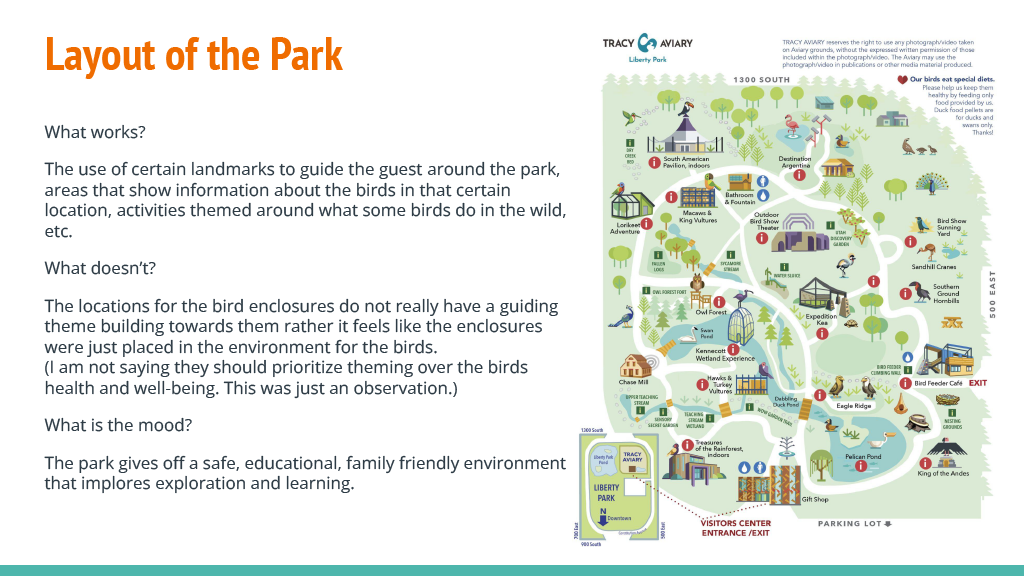
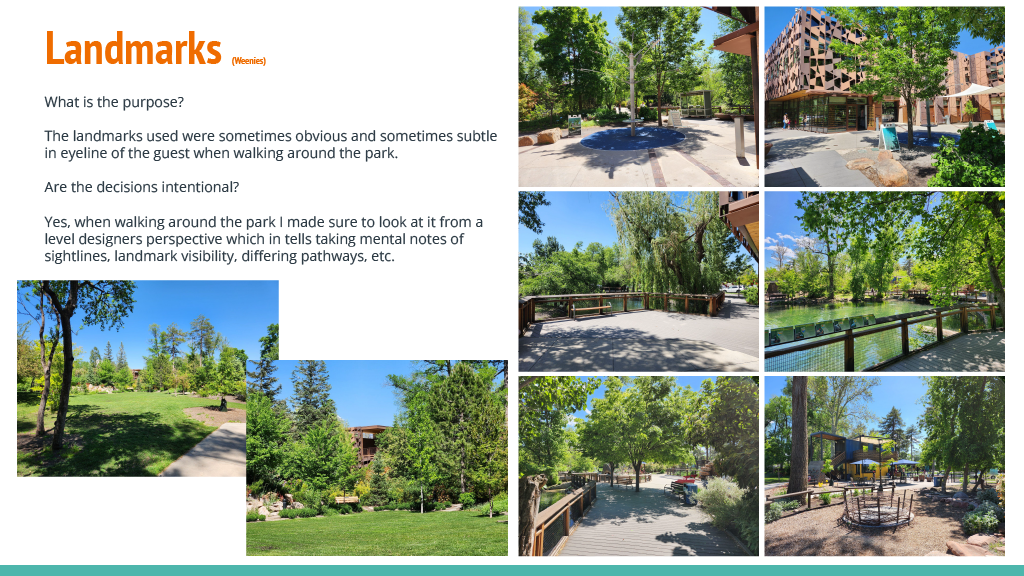
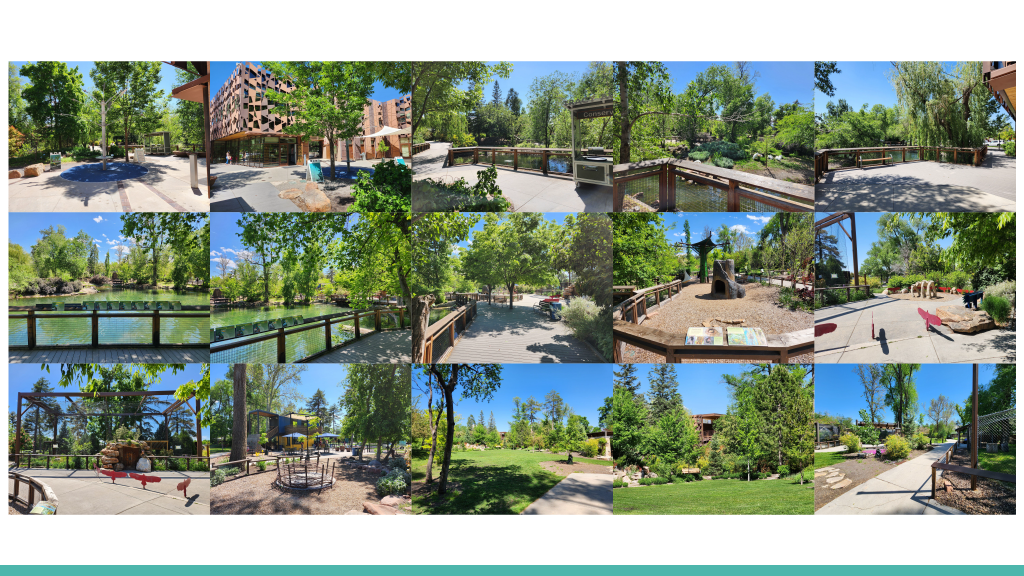
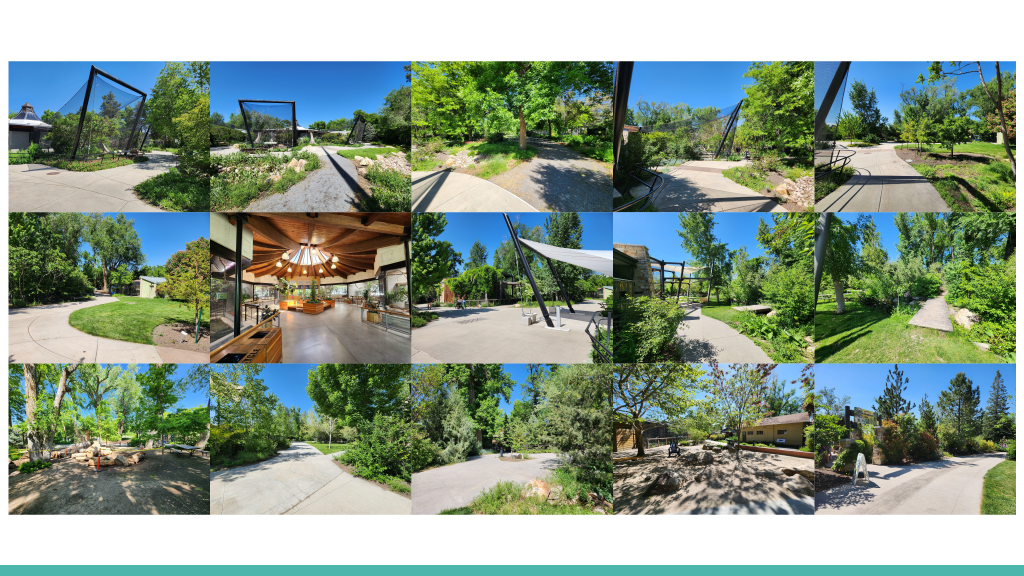
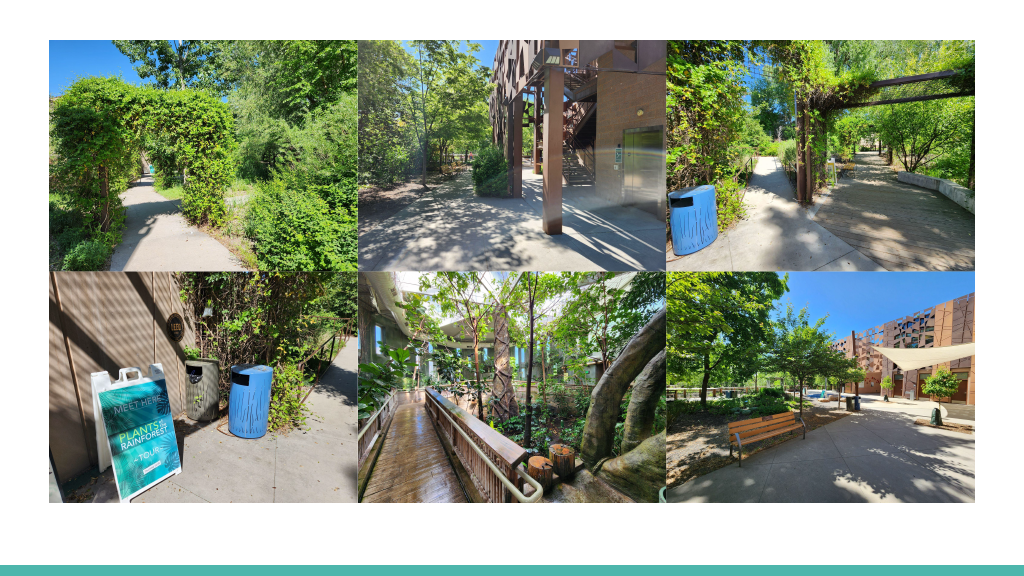
My process begins with gathering information on my chosen real-world location which was the Tracy Aviary & Botanical Gardens in Salt Lake City, UT. I looked for landmarks, points of interest, pathways, and understanding lines of sight within a park environment. By taking over 70 photos of the location, I was able to learn fascinating information on how parks look and feel such as the parks pathways being circular to help suggest constant movement for the guests to visit the entire park.


Gymnasium/Mechanics:
Gymnasium:
For this project, I didn't create a gym due to the levels blockout taking priority over the simple mechanics that would be implemented in later iterations. Also, I was focusing on how to approach level design in general while still providing a relatively accurate depiction of a park-like environment.
Mechanics:
- The player primarily interacts with the environment by walking and collectables.
- The primary mechanic in priority is walking. For collectathon games, movement is the primary source of collecting majority of items presented in a level with this level having only walking as the movement due to the simplistic nature of the level itself.
- The secondary mechanic in priority is collectables. Collectathons are based around the notion of collecting every single collectable indicated to the player via collectables and these collectables can be anything from golden puzzle pieces to coins. In this case, I am using coins as the main collectable throughout the level.
First Iteration:
After creating the proposal, I began constructing a park environment that is heavily inspired by birds in Unreal Engine 5. I needed to create multiple landmarks with easy lines of sight to allow the player to clearly see where they might want to go next. The landmarks were a lighthouse, playground, a dome, a giant perch tree with varying elevations, and feeders for both food as well as water.
Feedback/Takeaways:
Player Feedback:
- Add more foliage to environment and use more lighting.
- Adjust perch tree platforms for more visibility of the level.
- Certain railing feels tight to the players visibility.
Observational Feedback:
- Goes off path and initially did not understand main structure.
- Followed paths and went in opposite direction.
- Following paths and notices landmarks.
Takeaways:
1. Players needed the environment to be further fleshed out/refined as well as additional lighting needed.
2. Majority of players followed the pathways created for them while noticing landmarks along the way.
3. Railings are too thick to see anything under the platforms.
Second Iteration:
For the second iteration, I added more details to the map such as filling the rest of the map with foliage to make it feel more like a park environment to avoid it being to empty in the level.
Alterations/Solutions:
After analyzing the feedback/takeaways, I made alterations that correlated to them and refined the level's experience overall. Below are the problems with their solutions to the feedback/takeaways and how those solutions worked.
Problem(s): Players needed the environment to be further fleshed out/refined as well as additional lighting needed. Railings are too thick to see anything under the platforms.
Solution(s): I added the rest of the tree foliage to make the park feel more full while making sure each section of the level can't be seen directly through the trees to then have players focus on using the landmarks to garner interest. I then added fencing along every main pathway to further guide the player whilst avoiding the players from just running into the trees geometry. In addition, I made some adjustments to the lighting inside of the perch tree although it is minor.
Feedback/Takeaways:
Player Feedback:
- Likes playground, likes how fences help with guiding, likes taking walkway and landmark locations.
- Likes distinct colors used, can't see underneath perch tree platforms, and adjust lighting in lighthouse.
- Likes dome with how it resembles source material, likes atmosphere with it feeling maze-like, and possible steiner points.
Observational Feedback:
- Notices bird cage environment, likes playground, and adjust lighthouse lighting.
- Jumps off path, has choice paralysis, and railings could be thinner.
- Immediate draw to the perch tree and adjust lighting in lighthouse.
Takeaways:
1. Players enjoyed the environment specifically the landmarks and how the pathways reinforce guiding the player.
2. Interior lighting of the lighthouse needs to be adjusted.
3. Railings are still too thick to see anything under the platforms.
4. Players jump of the path leading to them getting stuck.
Final Iteration:
For the final version, I added collectables and made any final touch ups where it was needed to then produce the final product. The final version of this project does not contain UI elements nor sound design due to my inexperience at the time to implement them as well as wanting to focus on cementing level design principles.
Alterations/Solutions:
After analyzing the feedback/takeaways, I made alterations that correlated to them and refined the level's experience overall. Below are the problems with their solutions to the feedback/takeaways and how those solutions worked.
Problem(s): Interior lighting of the lighthouse needs to be adjusted.
Solution(s): The lighting in the lighthouse was bland even with the collectables being added which made me change what lighting was used. Originally it was set to a generic lighting system then I changed it to lumen for darker shadows which then helped with the collectable coins emitting light. In addition, I added a post process volume that adjusted exposure to make it appear as if the player was entering and dark space naturally.
Problem(s): Railings are still too thick to see anything under the platforms.
Solution(s): The railings themselves were still an issue in terms of width/depth for player to effectively see what was below/around them. I altered the railings and the platforms to provide more visibility for the player which solved the issue.
Problem(s): Players jump of the path leading to them getting stuck.
Solution(s): This problem has persisted since the beginning of the project because players would often get themselves stuck due to their ability to jump. I then made it to where players no longer where capable of jumping which solved the issue. This also avoided having to use invisible walls to restrict the player which would have taken them out of the immersion.