Tiny Sheriff was my capstone project at the University of Utah, which was built in 6 to 7 months with a 29-person studio called Rotgut Games, LLC. Tiny Sheriff is meant to be an homage to old flash games in terms of aesthetics, but for gameplay we were aiming for a smooth gunplay movement experience with momentum for greater player skill expression. In addition, the games playtime is meant to be around 10 minutes of fast and challenging gameplay, but with majority of player experiences the game can take up to over an hour due to the intentional difficulty/learning curve.
As Tiny Sheriff’s design lead, it was my responsibility to lead the design team and work closely with every team lead to ensure that any decisions made aligned with what the game is meant to be from the creative vision holders.
Creating Weapon Metrics
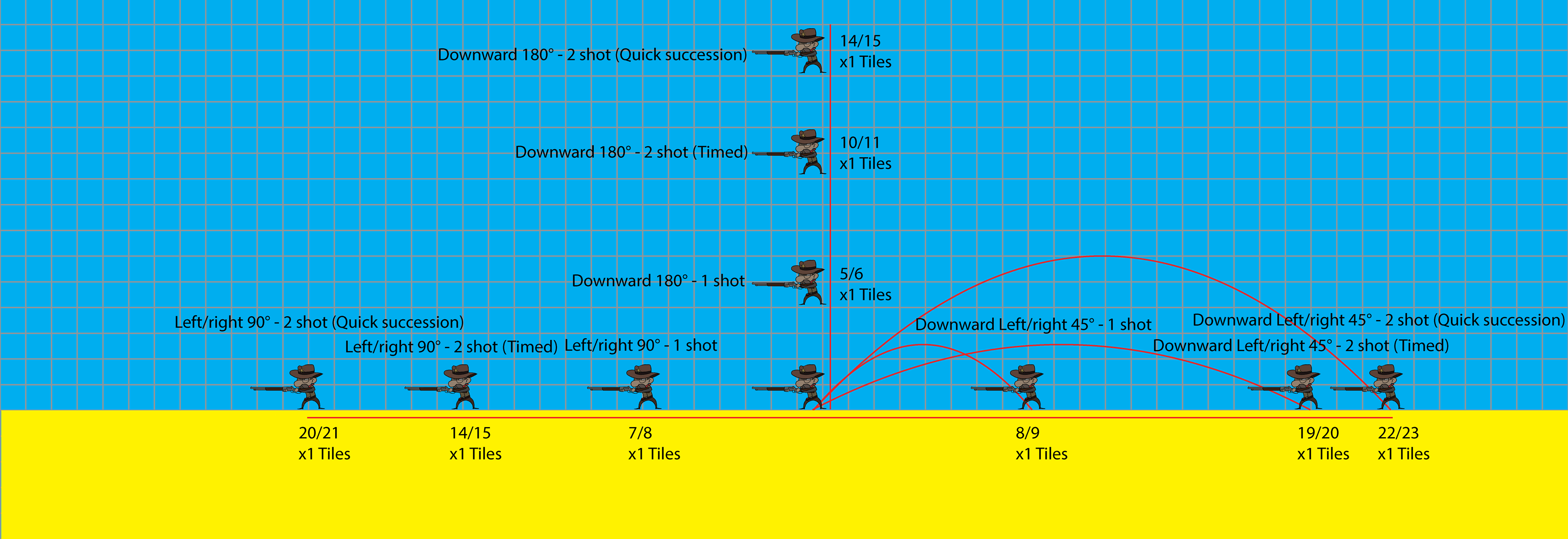
During Tiny Sheriff’s early development I was responsible for establishing weapon metrics to guide game design and level design thinking going forward. In addition, these metrics were essential for fine tuning how weapons interacted with the player and the environment. In early development, the weapons functioned as purely the propellent with the player having little control over direction via movement key presses.
Problem(s): Playtesting provided us with feedback giving results saying that the current movement system felt restrictive and that people were often frustrated with the movement rather than being able to achieve a sense of flow with the movement. This was a major issue that needed to be resolved since the game hinged on player controlled movement being fluid for the experience to enjoyable yet fairly challenging.
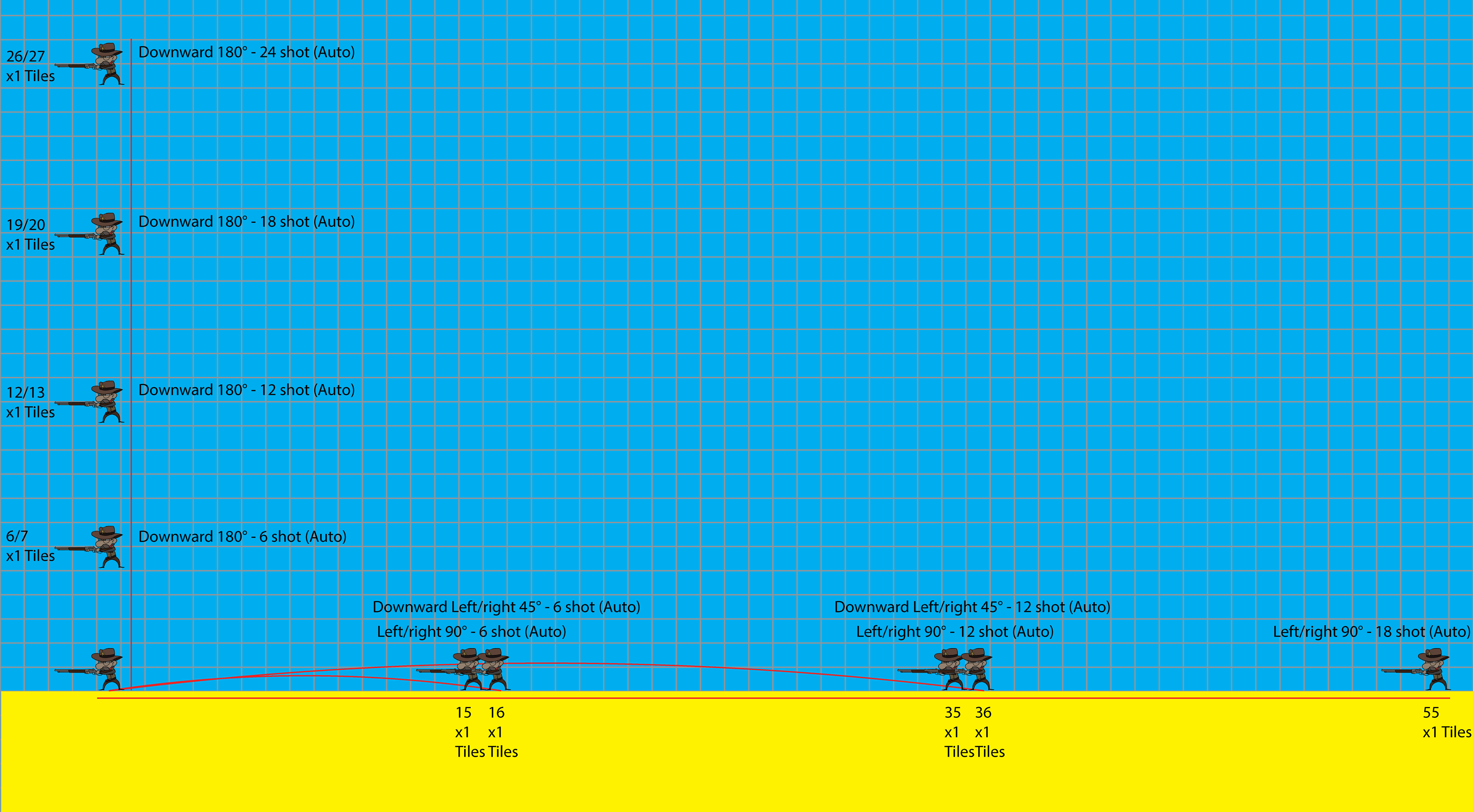
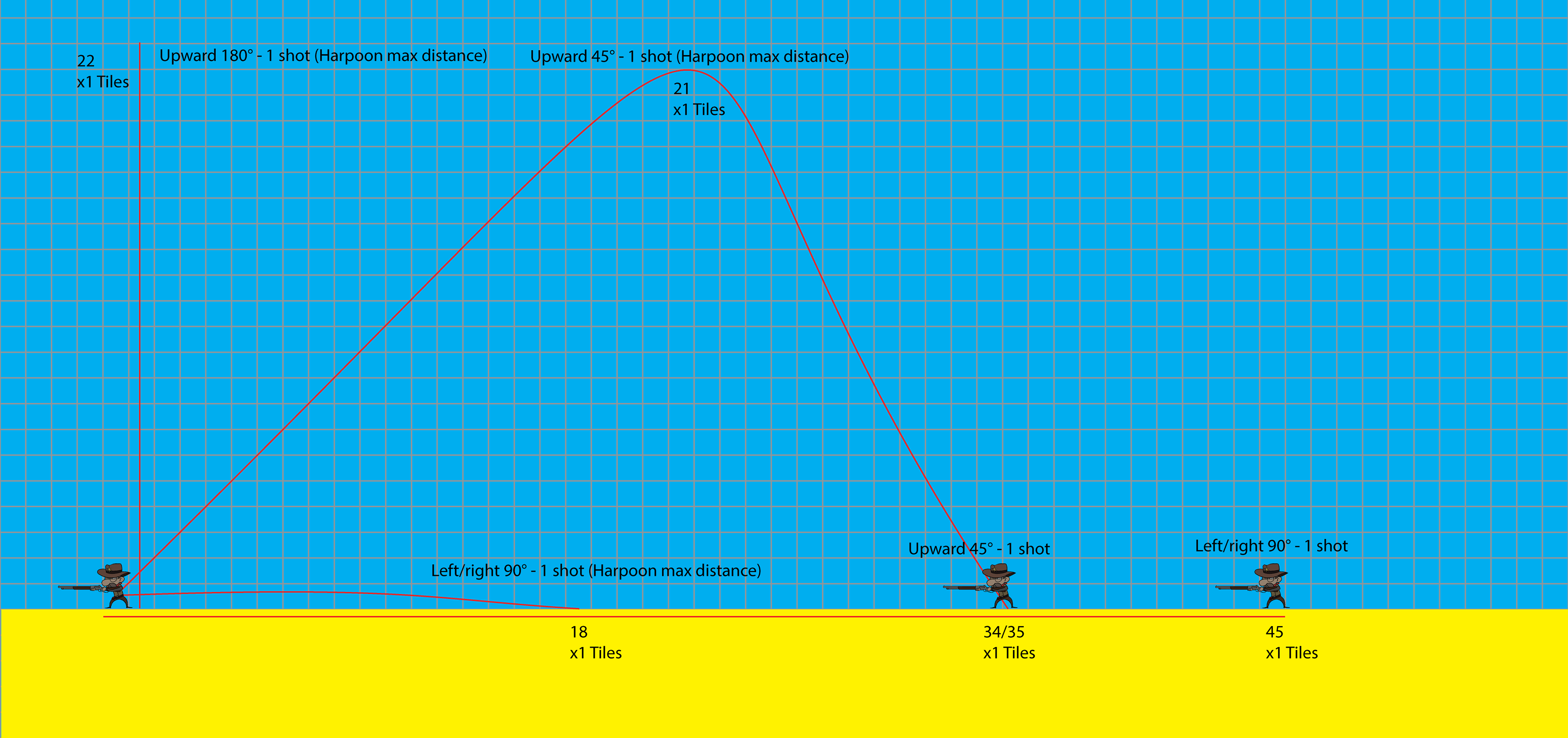
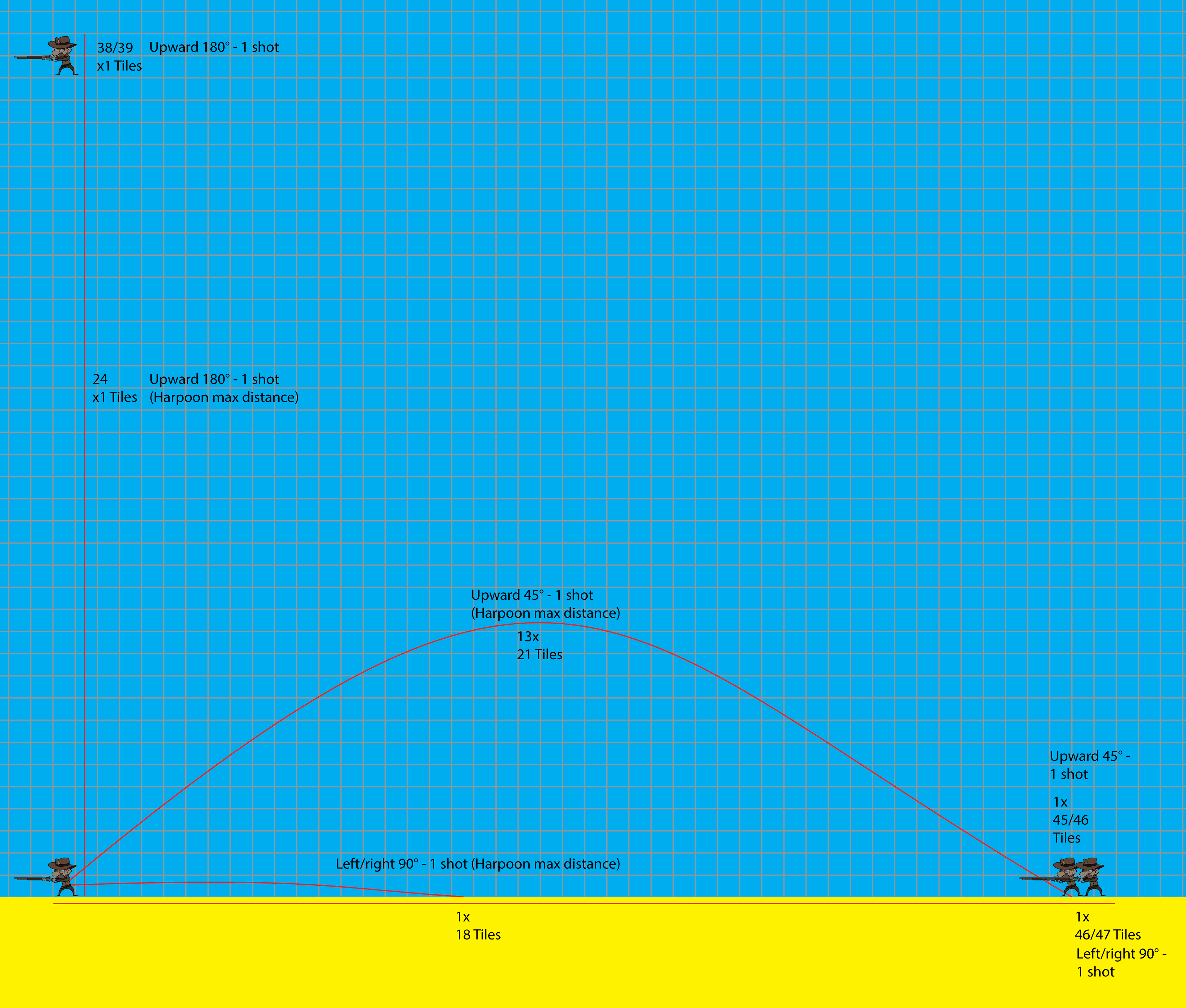
Below are images of the early weapon metrics that was used for the first version of the movement system that had the weapons being the only source of propellant and player control in the air.
Early Weapon Metrics:
Double-Barrel Shotgun:
Gatling Gun:
Harpoon Gun:
Solution(s): Thusly, we came up with an idea that could facilitate the issue of movement feeling stiff/unsatisfying by implementing a momentum based system that gave the player more agency and control over the characters movement.
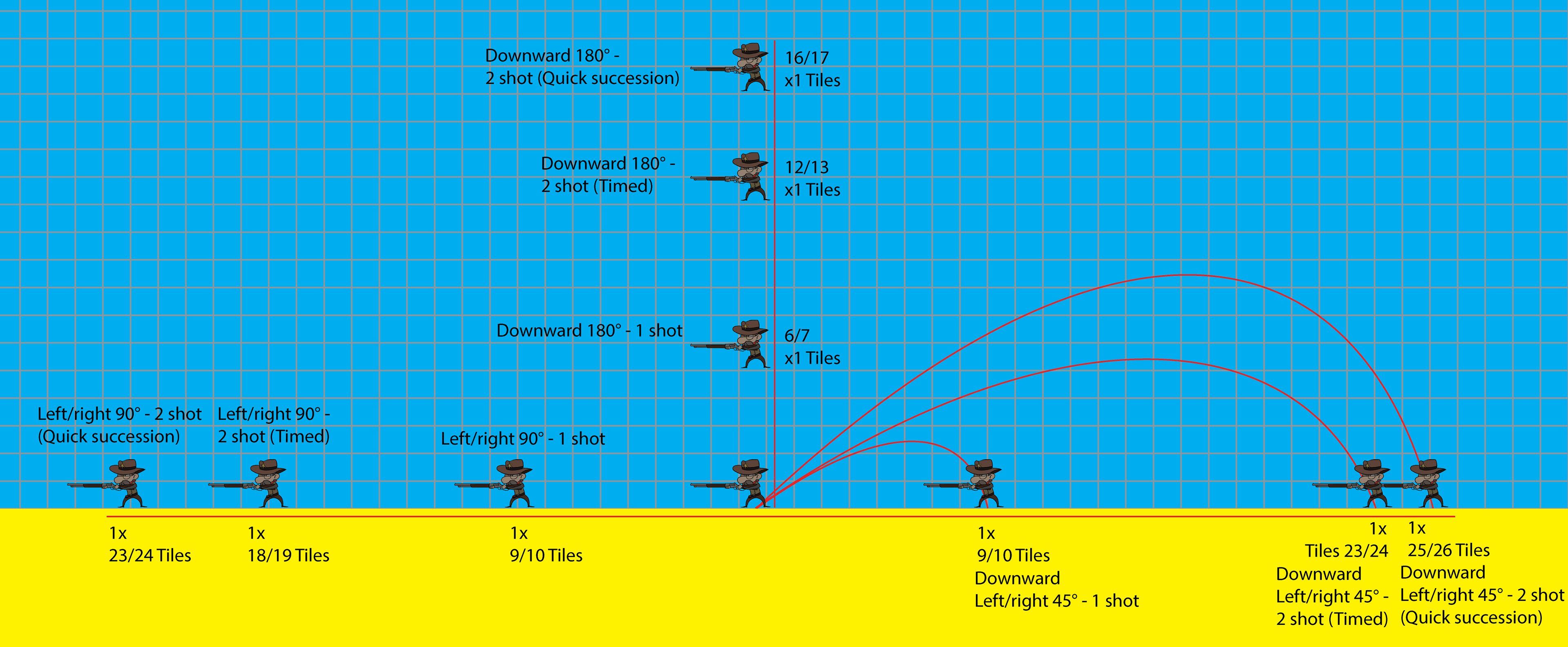
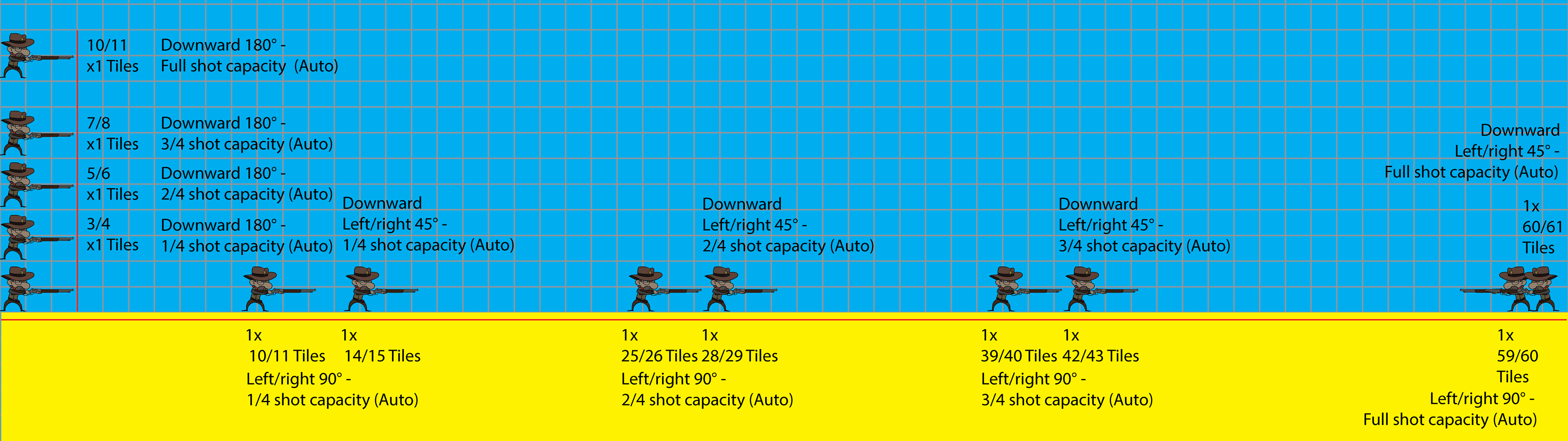
Below are images of the final weapon metrics that are used for the final game movement system which takes into account the players directional key presses with momentum to help aid in a more responsive experience.
Final Weapon Metrics:
Double-Barrel Shotgun:
Gatling Gun:
Harpoon Gun:
Impact:
In turn, playtesters responded highly positive to the change which put us on the right track to continue going forward with this system. In addition, a change like this heavily affected the level design by having to increase physical length and heights of the levels to accommodate it.
Small Changes, Large Impact
As design lead, I had to figure out solutions to issues that negatively affected the player experience. A good amount of these issues were solved with small/minor changes that then created a largely positive impact on the game as a whole. Here are two examples of these kinds of changes:
Altering Rumbleweed Arena:
Problem(s): Rumbleweed is the first boss of the game and initially he was too easy because of how he moved in the arena. He had a consistent diagonal pattern that could be easily avoided without the player ever having to use the movement they learned from previous levels. We could have made the movement pattern randomized, but with the timetable we had it was not a viable option for making it more complex than it needed to be.
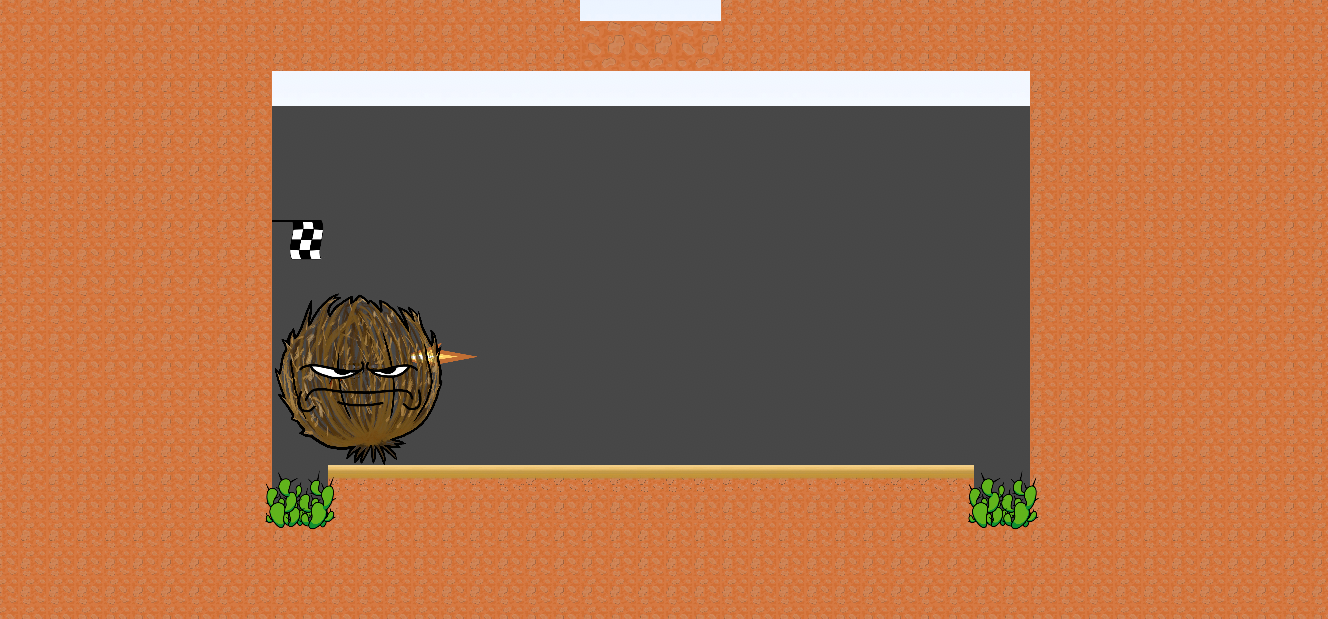
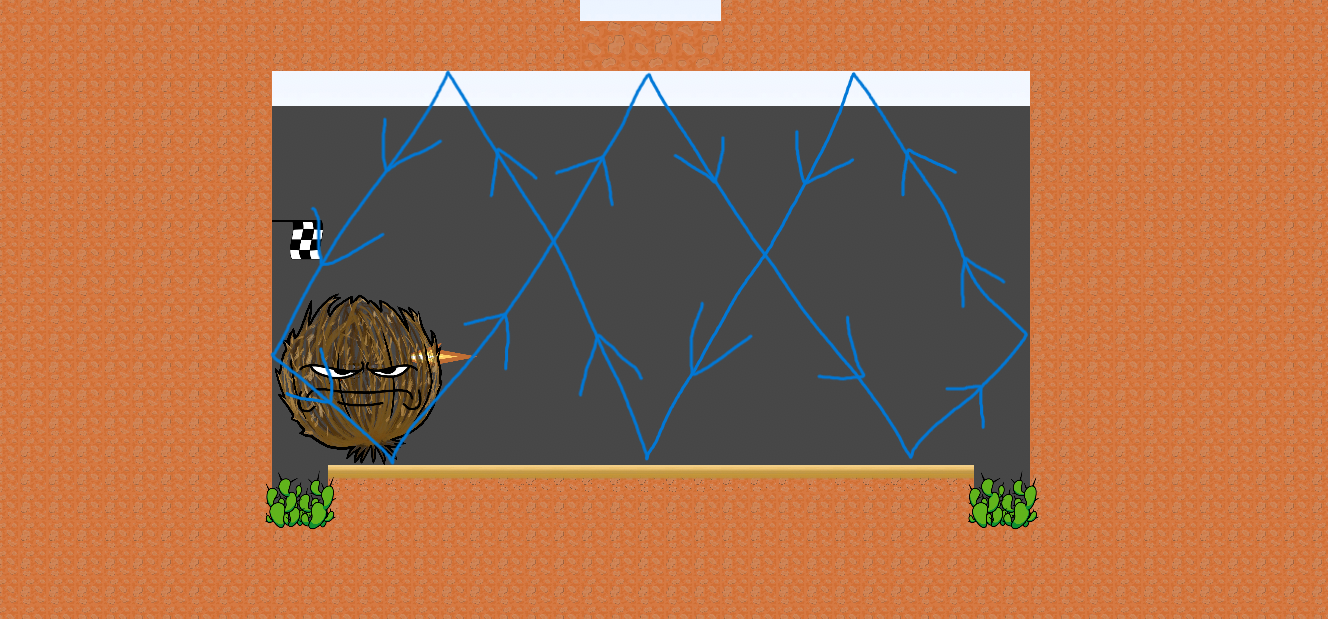
Solution(s): Instead of giving Rumbleweed a more complex and randomized path in the level through programming, I recommended we add two slopes on the top corners of the arena as a possible idea.
Impact:
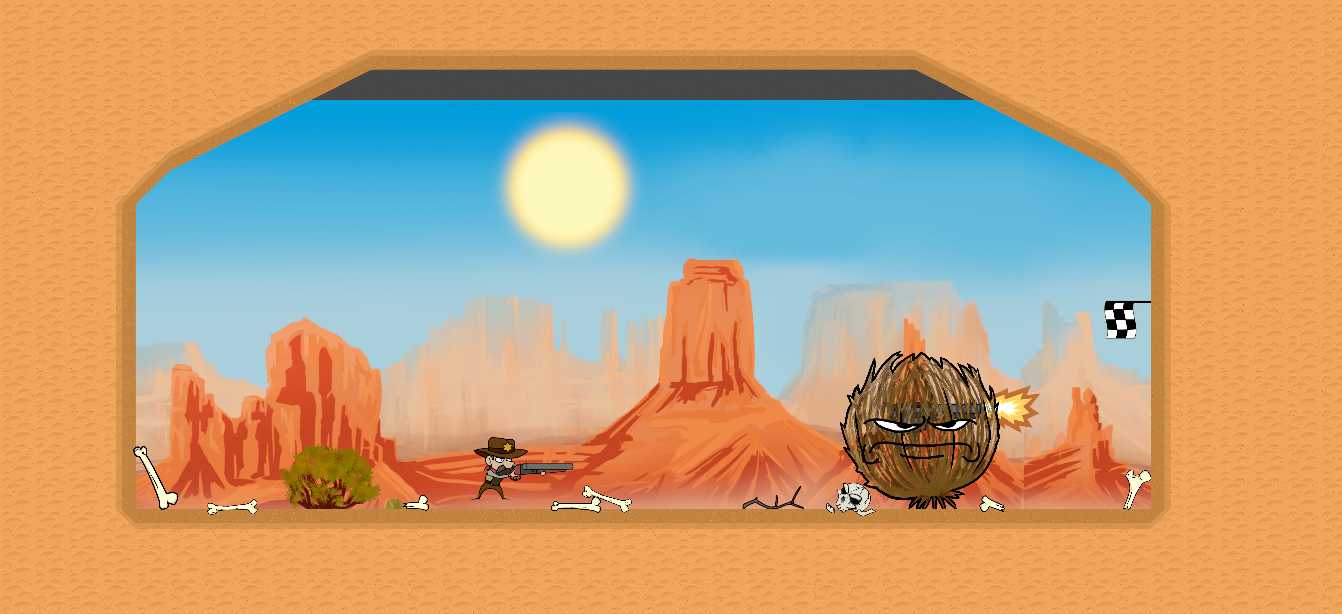
By introducing this change to the arena, it made Rumbleweed’s movement more random/chaotic without the need of heavily changing how he moves in terms of his pattern. To further add to his movement around the map, we made his weapon and the movement pattern affect his body similar to the player in terms of push back to have a greater presence in the arena instead of only really moving during the pattern attack.
Altering Level Backgrounds:
Problem(s): Player feedback had indicated that the game didn’t feel like it had enough meaningful progression even though we had enough progression in the game for players to enjoy as they were beating bosses/levels. We didn’t have time to create more content or change elements of the game design this late into production, so something simple was needed to fix it without having to make major changes.
Solution(s): Instead of making major changes to the games design or adding unpolished content, I recommended we focus on visual progression specifically the backgrounds.
We had a background for the game already made and it was used in every level, visually this made the player feel like little progress was being made.
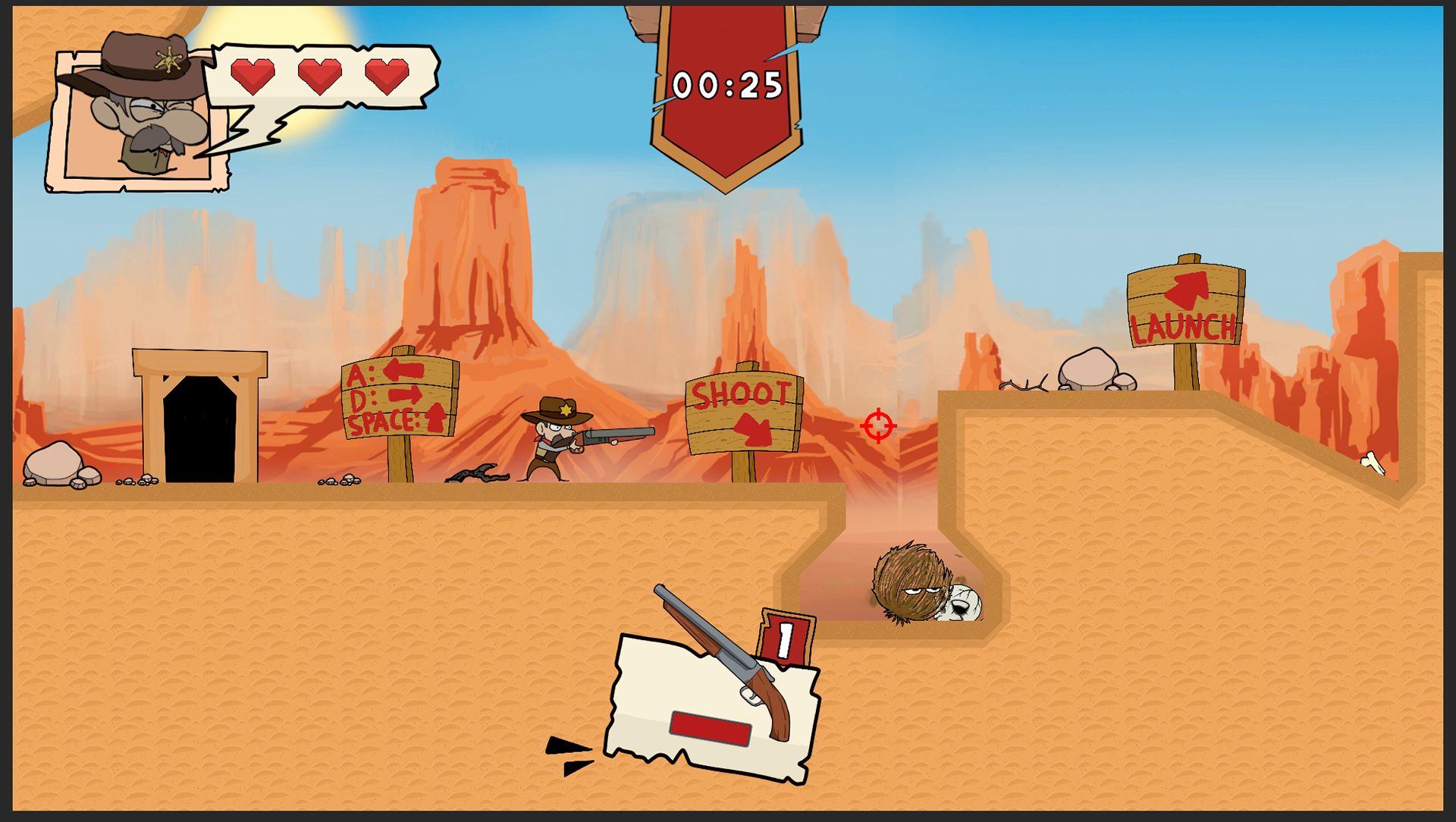
I then recommended we have the same background, but set at different times of day since the notion that the passage of time is occurring can psychologically aid in the feeling that more progress is being made by the player.
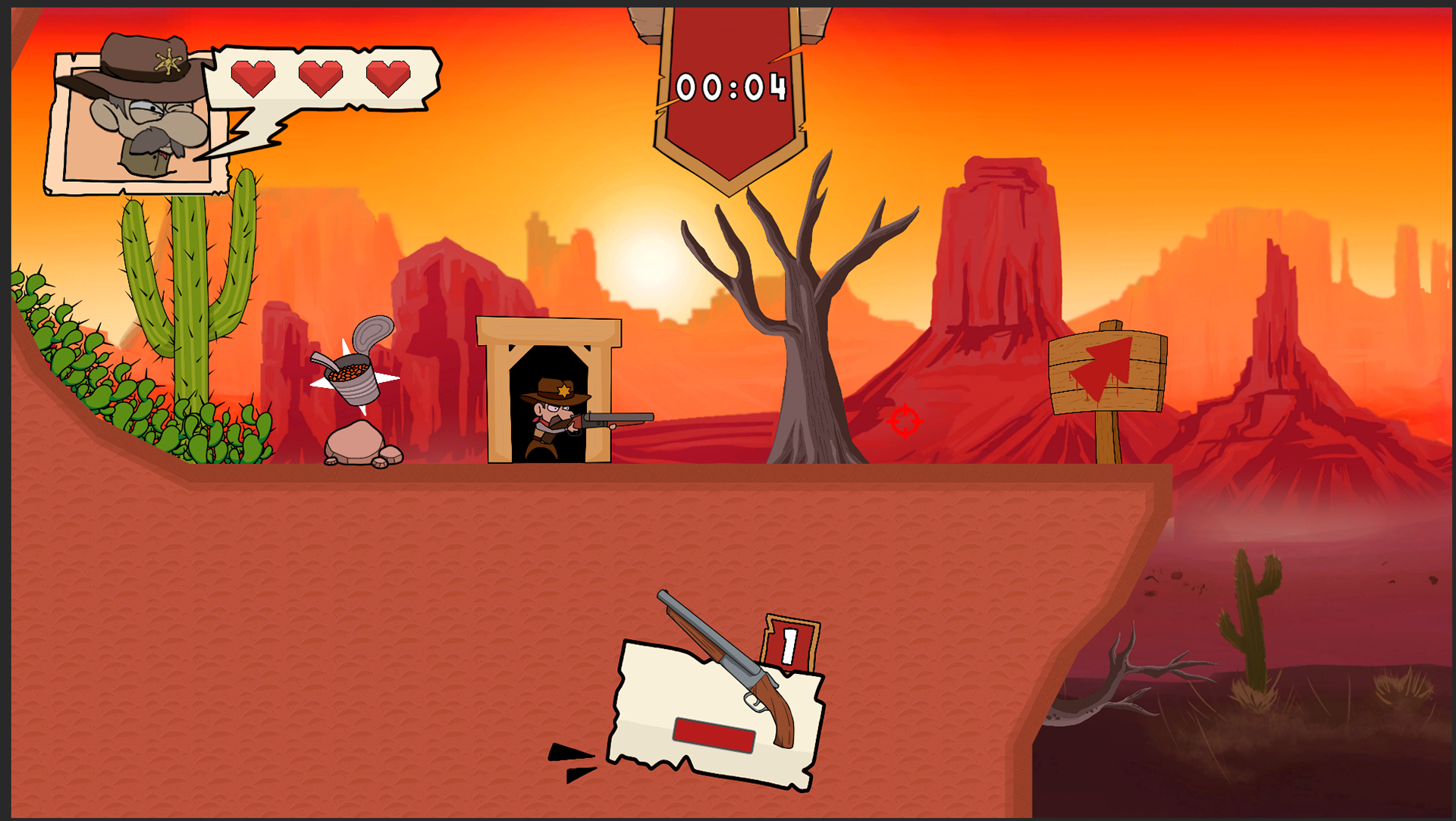
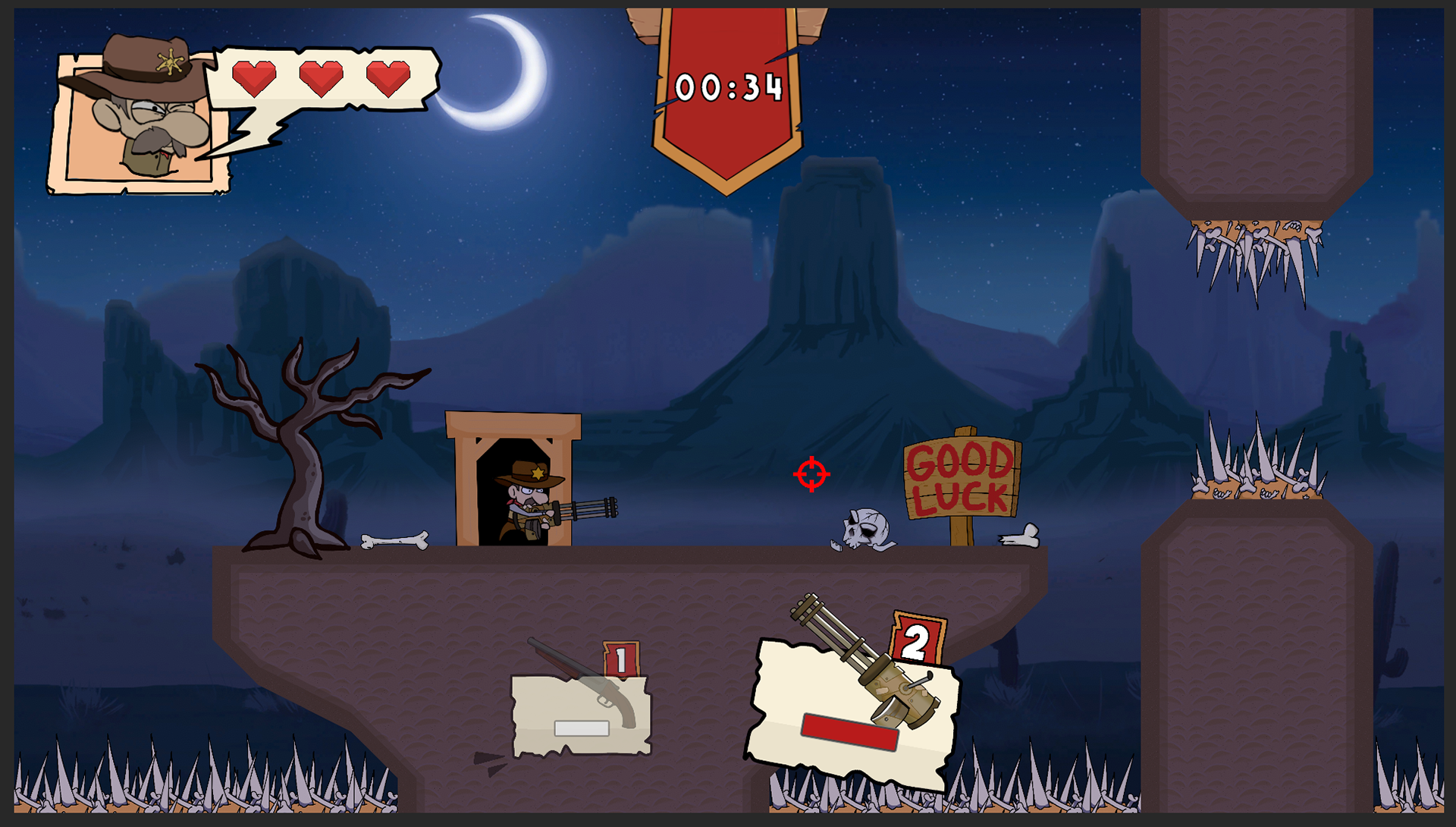
Impact:
With these additional backgrounds, it fixed the issue of the players feeling that the game was missing more meaningful progression. Furthermore, by having these different times of day allowed us to color the levels to match the backgrounds further immersing the player into the environment making the experience of the game more enjoyable.